Dropping the Drops: New Ways to Treat Glaucoma
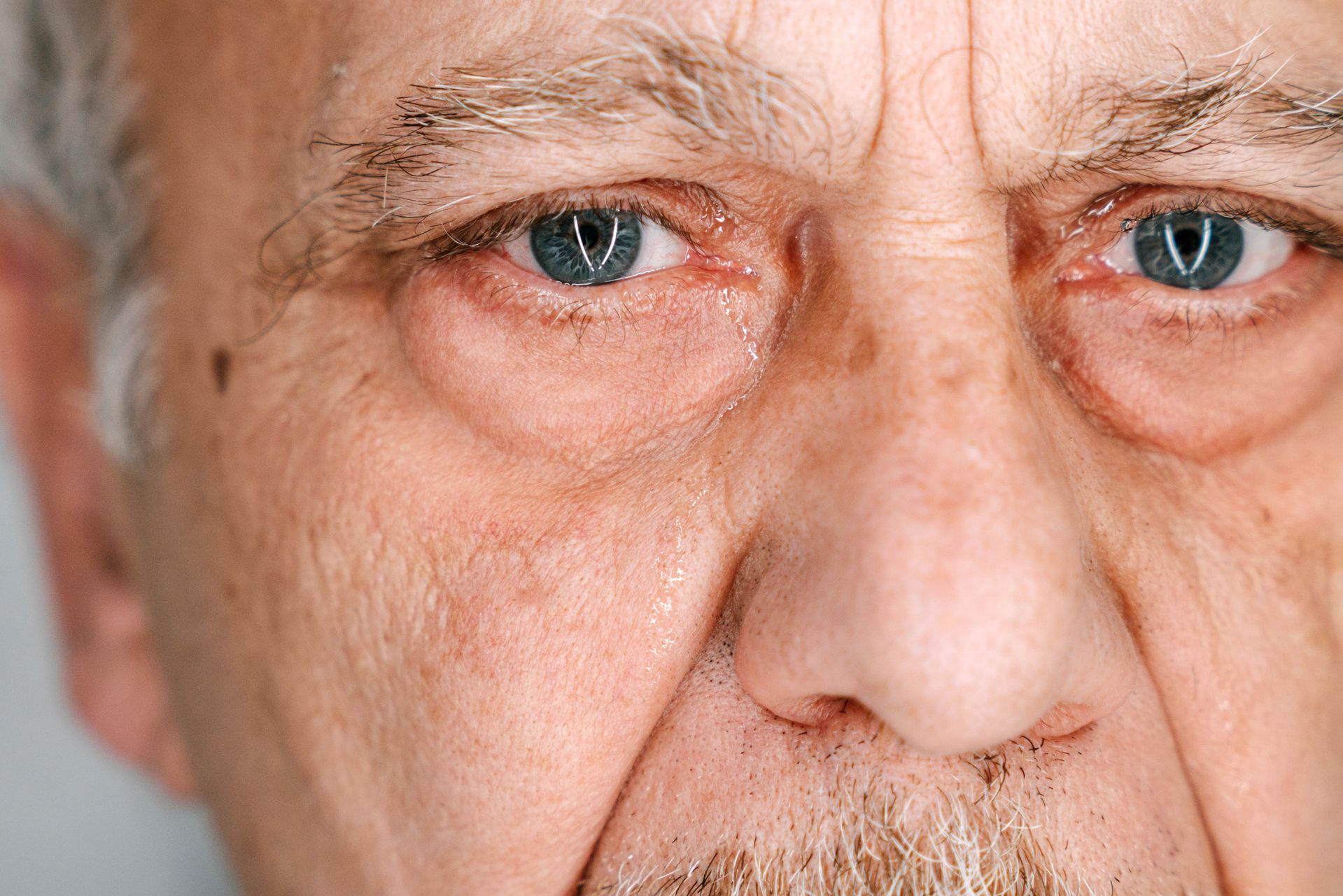
If you're in your fifties, you probably don't feel “old.” You're active, working, maybe travelling and enjoying life. But if you've been diagnosed with glaucoma, there's a good chance it comes with a daily ritual you've grown to resent: eye drops.
For decades, drops have been the mainstay of lowering eye pressure. They work, but they're a burden. If you're tired of the stinging, the redness, and the daily reminder of a chronic condition, there's genuinely good news. The technology has moved on, and for many patients there are now two strong alternatives to drops: selective laser trabeculoplasty (SLT) and minimally invasive glaucoma surgery (MIGS).
The problem with glaucoma eye drops: side effects and dry eye
Most patients tell me the inconvenience is the worst part — remembering drops at dinner or on a hike. But as ophthalmologists, we worry about something else as well: the effect of the drops themselves on the surface of the eye.
Many glaucoma medications contain preservatives, commonly benzalkonium chloride, to keep the bottle sterile. The trouble is that while these preservatives kill bacteria, they're also toxic to the delicate cells on the surface of the eye. Over months and years they cause chronic inflammation, leaving eyes red, gritty, dry and irritated. It's a cruel irony: the treatment protecting your sight can be the thing making your eyes miserable. For some people the drops become genuinely disabling — which brings me to a patient I'll come back to shortly.
SLT (selective laser trabeculoplasty): a drop-free first step
For many patients, especially those who don't yet need cataract surgery, the first step away from drops is selective laser trabeculoplasty, or SLT.
Picture the eye's drainage system as a fine mesh filter. Over time it clogs, pressure builds, and the optic nerve is put at risk. SLT is a gentle, in-clinic procedure that uses very short pulses of low-energy light to target specific cells in that mesh. Unlike older lasers that burned tissue, SLT simply prompts the eye's own healing response to clear the drain naturally. It's painless, takes only a few minutes, and for many people it removes the need for drops for years.
This isn't a fringe option. The landmark LIGHT trial has established SLT as a first-line treatment for ocular hypertension and glaucoma, and it's now recommended as such in the UK (NICE), the United States (American Academy of Ophthalmology) and Europe (European Glaucoma Society). The six-year LIGHT data showed that 60 to 70 percent of patients treated with SLT were free of both medication and surgery at six years. It's a low-risk procedure with robust evidence behind it. To my mind it's no longer a question of “why” you would have SLT, but “when.”
MIGS (minimally invasive glaucoma surgery) and the iStent
If you're also developing cataracts — cloudy lenses that come with age — we can go a step further with minimally invasive glaucoma surgery.
At Re:Vision we use tiny micro-bypass stents such as the iStent. These are among the smallest implants used anywhere in the body, so small you can't see or feel them once they're in place. Much like a stent in heart surgery, but for the eye, the device is placed through the blockage in your drainage angle, creating a permanent shortcut for fluid to escape and keeping pressure down.
Combining MIGS with cataract surgery
The ideal time to place a MIGS device is during cataract surgery. Since we're already operating to replace the cloudy lens, we can insert the stent at the same time. It adds only a few minutes but can add years of freedom from daily drops.
I think of one patient, a man in his mid-fifties, referred with both advancing glaucoma and cataract. He was the main driver in his household and the full-time carer for his unwell wife. On the face of it, his glaucoma was severe enough to need a trabeculectomy — a traditional filtration operation with a longer, more restrictive recovery, including no bending or heavy lifting for six weeks, which would have made caring for his wife almost impossible. Instead, I performed cataract surgery with an iStent, aiming to treat the cataract safely and win control with a gentler procedure first. Six years on, it has held. His glaucoma hasn't progressed, he's never needed the bigger operation, and he's still driving and still caring for his wife.
What results can you expect? One patient's story
Another patient I won't forget was a retired jeweller. She'd given up making jewellery because her glaucoma, and the drops treating it, had taken so much from her. She'd already failed four different eye drops, and their toxic effect on the surface of her eyes had left her vision and comfort badly compromised. I performed cataract surgery with a MIGS procedure, and she responded beautifully. A year on, she remains completely free of drops. With her comfort and vision restored, she's returned to the craft she loves, with a newfound energy. She made me a necklace to say thank you. That's the kind of outcome these procedures can offer.
Cost and insurance: is MIGS covered in New Zealand?
Cost used to be a barrier to this technology, but the picture in New Zealand has changed. Most insurers now recognise the long-term value of reducing reliance on medication. Southern Cross, for example, covers all MIGS procedures (sometimes with a co-payment) and glaucoma laser procedures, with the exact cover depending on your individual policy. For many Kiwis, this technology is now genuinely within reach.
Book a glaucoma assessment in Auckland
You don't have to accept dry, irritated eyes as the price of protecting your vision. Whether it's a gentle laser or a micro-stent at the time of cataract surgery, there are good options to get you off the bottle.
I've been performing glaucoma laser procedures for eleven years, across both public and private practice, and I carry out several every week. If drops are wearing you down, book a suitability assessment with me at Re:Vision Auckland. We'll look at your drainage angles together and work out which approach — laser or stent — is right for you.
— Dr Divya Perumal

Dr Divya Perumal
Glaucoma fellowship-trained ophthalmologist at Re:Vision, Auckland.




.png)