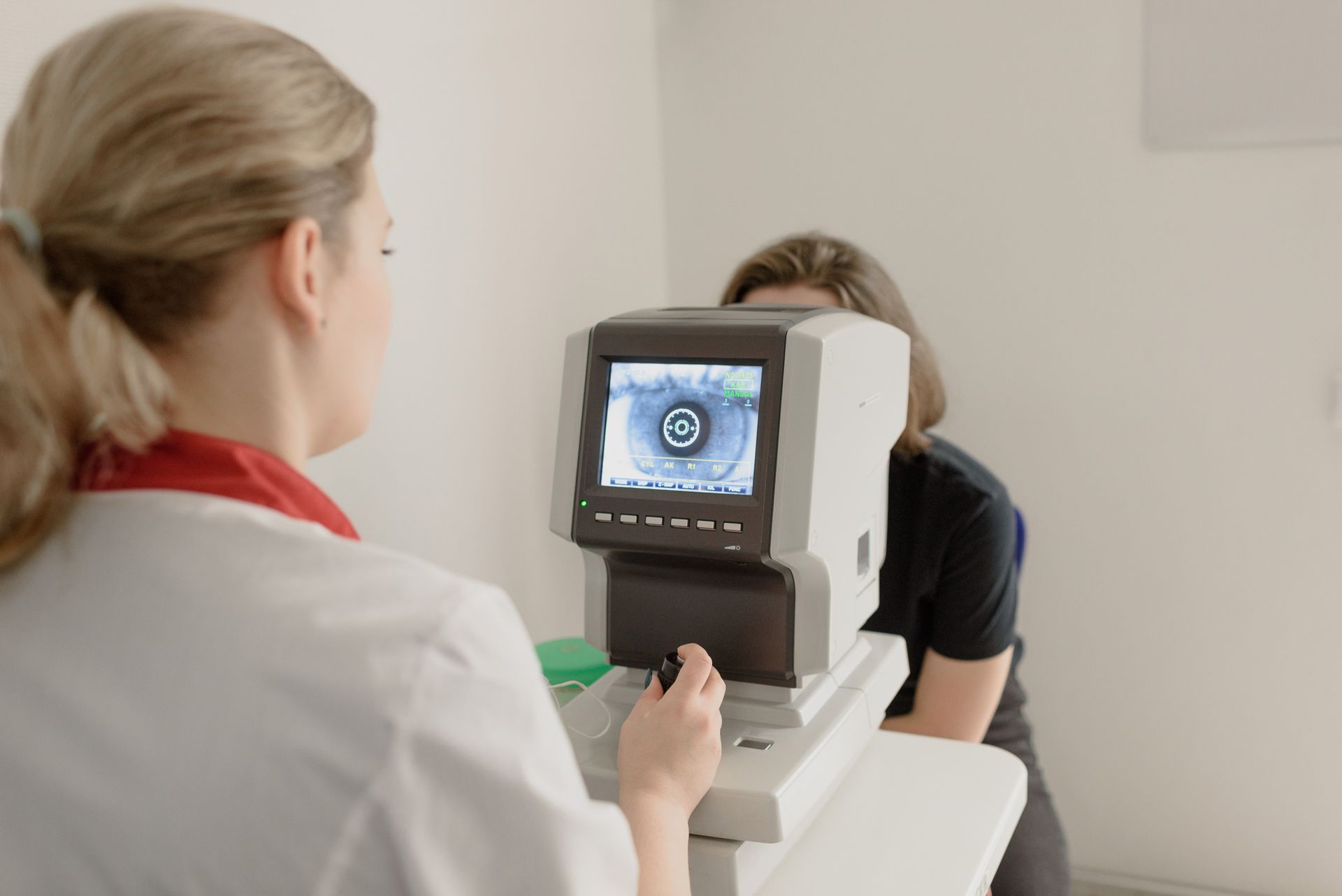
PRK and LASIK are two types of laser eye surgery that can eliminate reliance on glasses or contact lenses. Both procedures correct refractive errors by changing the shape of the cornea so that the eye can focus better. What ultimately sets LASIK and PRK apart is how the eye surgeon accesses the corneal tissue.
In this guide, we compare PRK and LASIK, looking at things like suitability, procedure, recovery, results, risks, and cost. Only a professional assessment can determine the safest and most predictable option for you, but this article can help give you a general understanding beforehand.
PRK vs. LASIK: Overview
Here's a snapshot of the main differences between LASIK and PRK surgery. Briefly explain:
|
Comparison |
LASIK (laser-assisted in situ keratomileusis) |
PRK (photorefractive keratectomy) |
|
General suitability |
People whose corneas are thick enough and who want less downtime |
People with thinner corneas, specific eye characteristics, or a high chance of eye trauma |
|
Procedure |
The surgeon creates a thin flap on the surface of the cornea, then performs the laser treatment and repositions the flap |
The surgeon removes the top layer of the cornea, then performs the laser treatment and places a protective contact lens over the eye |
|
Recovery |
Faster and more comfortable |
Slower and can be uncomfortable |
|
Results |
Excellent long-term results for suitable patients Quick vision improvement |
Excellent long-term results for suitable patients Gradual vision improvement |
|
Risks and considerations |
General laser eye surgery risks Flap-related complications |
General laser eye surgery risks Greater risk of short-lived corneal haze |
|
Cost |
$3,900 per eye (at Re:Vision) |
$3,900 per eye (at Re:Vision) |
Major differences between PRK and LASIK
Now that you've got the basic idea, here's some more in-depth information on what separates these two popular types of laser vision correction surgery:
Who is suitable for LASIK and PRK?
A comprehensive laser eye surgery assessment is the only way to determine suitability for LASIK and PRK. But here's what we generally find:
LASIK suits patients who
- Have sufficient corneal thickness
- Have a stable prescription
- Meet the eye health and general health conditions for flap-based surgery
- Want less downtime during the initial recovery period
PRK suits patients who:
- Have thinner corneas or other anatomical things we need to consider
- Don't fit the profile for LASIK
- Play contact sports or do activities with a high risk of eye trauma
- Don't meet the eye health and general health conditions for flap-based surgery
How are the procedures different?
LASIK and PRK are both quick and painless day procedures, allowing patients to go home the same day. They also both use laser technology to reshape the corneal tissue during eye surgery.
Where they really differ, from a procedural perspective, is that PRK doesn't require the surgeon to create a corneal flap. Instead, they remove the epithelium (a layer of surface cells that regenerate on their own) from the treatment area. During LASIK, the surgeon creates a thin, hinged flap in the cornea to treat the tissue underneath it.
Neither procedure requires stitches. After LASIK, the corneal flap goes back into position and heals on its own. After PRK, a special contact lens protects the eye while the surface layer grows back.
How does recovery compare?
LASIK offers a faster and more comfortable recovery time. Eyes need a little more time to heal after PRK because the corneal surface must regenerate. Here's what recovery usually looks like:
- Initial discomfort: Eyes may feel gritty, watery, or just irritated immediately after LASIK. After PRK, stinging and light sensitivity may linger for a few days.
- Downtime: Most LASIK patients go back to work and daily activities within a couple of days. PRK patients commonly need to give it about a week, especially if their job requires lots of screen time, driving, or exertion.
- Speed of visual improvement: Usually, patients will notice a big difference in their vision the day after LASIK, though it can continue to fluctuate during recovery. After PRK, patients usually notice their vision improve gradually over the days and weeks following their procedure.
- Temporary vision fluctuations: Temporary blurriness, dryness, glare, or changing focus may be noticeable in early LASIK recovery. They're noticeable after PRK too, but can extend beyond the initial recovery phase as the regenerating surface heals and smooths out.
- Follow-up appointments: LASIK patients require two or three routine follow-up appointments in the months post-treatment. It's the same for PRK patients, with the addition of an early visit to remove the protective contact lens.
Are the results different?
Although the procedures and healing times aren't identical, PRK and LASIK produce similarly excellent long-term vision results in suitable patients. Individual outcomes may vary because of factors such as the patient’s prescription, eye health, and healing response.
Both procedures can treat:
- Short-sightedness (myopia): distant objects look blurry
- Long-sightedness (hyperopia): close objects look blurry
- Astigmatism: close and distant objects look blurry or distorted
LASIK patients usually notice improved vision sooner.
How do the risks compare?
PRK and LASIK are both surgical procedures, and all surgical procedures come with a level of risk. Careful patient pre-treatment screening significantly mitigates this risk.
Shared risks
Both procedures can cause short-term dry eyes, glare, halos, night vision changes, and fluctuating vision. Less commonly, they can also cause infection, inflammation, under- or overcorrection, regression, and the potential for further treatment.
LASIK risks
Flap-related risks, like movement, wrinkles, sub-flap inflammation, or eye-trauma related complications.
PRK risks
The initial recovery period can be uncomfortable and a little challenging as vision recovers slowly. PRK also calls for longer use of prescription eye drops and poses a greater risk of short-term corneal haze during healing.
Is PRK or LASIK more expensive?
At our laser eye surgery clinic in Auckland, the cost is the same, with both PRK and LASIK costing $3,900 per eye, inclusive of:
- preoperative consultations and assessments
- eye surgeon fees
- procedure costs
- medication
- follow up care
The cost of treatment is an important deciding factor. However, you should never consider it independently of suitability, surgeon experience, clinic reputation, technology, and aftercare.
PRK vs. LASIK: Which is best for me?
PRK and LASIK are both very effective forms of laser eye surgery, but which one is best for you depends on your eyes, lifestyle, and recovery preferences.
As a rough guide:
Need to get back to work and everyday life ASAP?
- LASIK might be the right choice, given your eyes are suitable.
Better off not having a corneal flap because of your corneal shape or thickness, sport, or job?
- PRK could be the way to go.
Laser Eye Surgery Auckland
Our experienced eye surgeons at Re:Vision are among New Zealand’s most experienced, with extensive expertise in both LASIK and PRK.
They use a comprehensive assessment to understand your eye health, prescription, and long-term vision goals before recommending the most suitable treatment.
Ready to take the first step towards clearer vision?

Refractive surgery & cornea fellowship-trained ophthalmologist at Re:Vision, Auckland.




.png)